
How Stair Climbers Work: Safety Features, Benefits & Suitability Explained
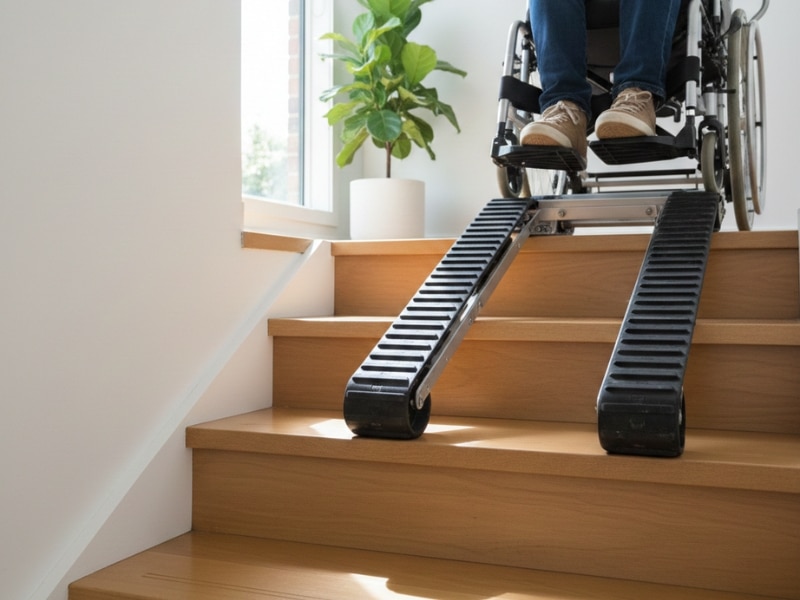
Stair climbers are becoming an essential mobility solution across Australian homes and care settings, especially in multi-storey households or facilities where stairs create barriers. But how do these devices actually work — and who are they suitable for? Below is the complete guide to how stair climbers operate, the safety systems behind them, and what Australians should know before choosing one.
AEO QUICK ANSWER
A stair climber uses motorised tracks or wheels, stabilisers, braking systems and load-rated frames to transport a person or wheelchair safely up and down stairs. The device grips each step securely, controls speed automatically, and supports independence without needing permanent installation.
What Is a Stair Climber and How Does It Work?
A stair climber is a mobility device designed to safely lift a person (often while seated or in a wheelchair) up and down stairs. Unlike stair lifts, stair climbers don’t require rail installation, making them suitable for rentals, older homes or multi-location use.
Key Mechanical Components
- Motorised tracks or wheels: Grip and climb each step with controlled movement.
- Load-rated frame: Built for stability and user safety, often supporting 120–160 kg+.
- Battery-powered drive: Ensures smooth, controlled ascent and descent.
- Tilt sensors: Detect steep angles and adjust climb positioning.
- Control panel or joystick: Makes operation simple for carers or users.
For users wanting flexibility and independence, many explore Reliable stair climbers for home and care environments that adapt to different stair types across Australian homes.
Safety Features — How Stair Climbers Keep Users Protected
Mobility stair climbers incorporate multiple safety systems:
- Automatic braking: Stops the device instantly if the operator releases control.
- Anti-slip tracks: Grip stairs securely, even on carpeted or polished timber steps.
- Stabilisers: Prevent tipping, especially during descent.
- Weight capacity monitoring: Ensures safe load distribution for users and wheelchairs.
- Secure harnesses or straps: Keep wheelchair users safely positioned.
- Tilt & balance sensors: Detect unsafe angles and correct positioning.
Because stair climbers qualify as assistive technology, it’s important that buyers understand broader device requirements. For clear guidance on safe use, suitability and support categories, the NDIS Assistive Technology Guidelines provide practical information to help Australians choose equipment confidently.
Benefits of Using a Stair Climber — Why Australians Choose Them
A stair climber offers a flexible mobility solution for homes, facilities, aged care and disability support environments.
Key Benefits:
- No permanent installation needed: Perfect for rentals or older homes.
- Portable: Can travel between homes, rooms or care facilities.
- Suitable for narrow or curved staircases: Works in many layouts that stair lifts cannot.
- Supports carers: Reduces manual lifting and injury risks.
- Restores independence: Users can move between floors safely and confidently.
- Cost-effective: Often far cheaper than structural renovations or stair lift installation.
Across Victoria and wider Australia, stair climbers are increasingly chosen for convenience, safety and long-term practicality.
Who Is a Stair Climber Suitable For? (Checklist)
Stair climbers are ideal for:
- People with limited mobility who cannot safely climb stairs
- Wheelchair users (depending on model)
- Seniors wanting independence without major home modifications
- Carers needing safe, load-assisted stair transport
- Homes with narrow, spiral or non-standard staircases
- Multi-location use (shared custody homes, care facilities, etc.)
Not suitable for:
- Very steep or damaged staircases
- Users above the load limit
- Environments without a trained operator (for specific models)
Stair Climber vs Stair Lift — Key Differences
To decide between a stair climber or a stair lift:
Stair Climber
- Portable
- No installation required
- Works on more staircase types
- Suitable for wheelchairs
- Lower cost
Stair Lift
- Permanent rail installation
- Requires structural changes
- Limited to one staircase
- Higher cost
- Adds value in long-term residences
If flexibility matters, stair climbers are often the better choice.
Final Thoughts — A Practical, Safe Solution for Australian Homes
Stair climbers give Australians of all mobility levels a safer, more flexible way to navigate stairs. With strong safety features, portability, and suitability across many home layouts, they offer independence without the need for permanent modifications. Whether for a Victorian terrace, a Queenslander, or a modern two-storey home, stair climbers are an effective, adaptable solution for daily mobility and caregiver support.