
Wheelchair Stair Climbers vs Evacuation Chairs: Which Is Safer for Australian Buildings?
When Australian buildings are designed or upgraded, stair safety for people with mobility limitations is often treated as an afterthought — right up until something goes wrong. Whether it’s a power outage, lift failure, or full emergency evacuation, stairs quickly become the biggest barrier.
This is where the debate usually starts: wheelchair stair climbers or evacuation chairs — which is actually safer?
Evacuation chairs have been the traditional answer for years. But powered wheelchair stair climbers are now far more common across Australia, particularly in hospitals, aged care, and public buildings. The reality is that safety isn’t just about what’s compliant on paper — it’s about what works under pressure, with real people, in real buildings.
This comparison looks at safety from a practical, Australian perspective.
Understanding the Two Options
Before safety can be properly compared, it’s important to understand how each option is intended to be used.
What Is a Wheelchair Stair Climber?
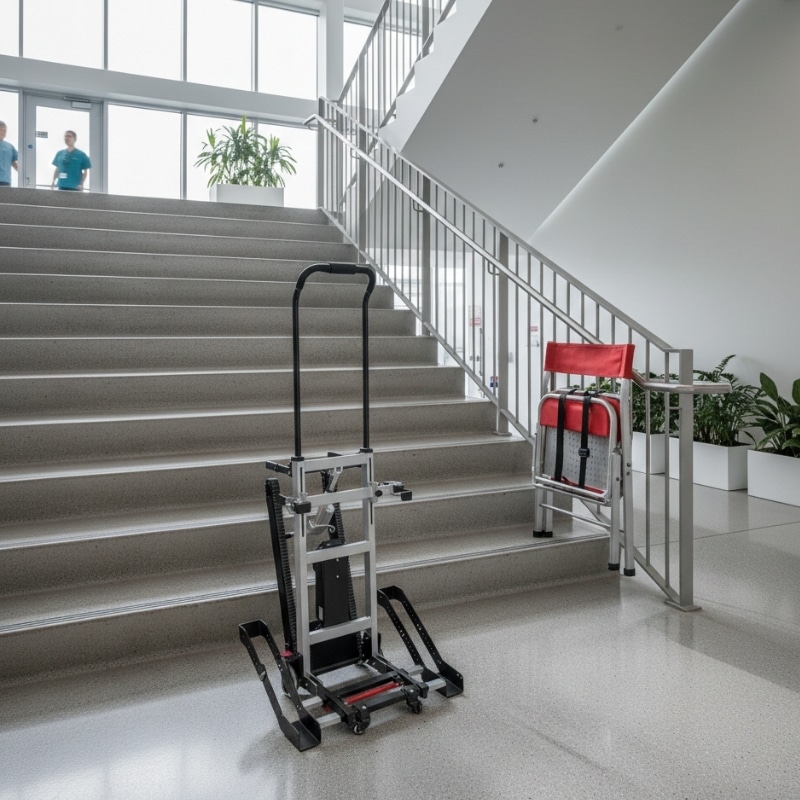
A wheelchair stair climber is a powered mobility device designed to move a person up or down stairs while they remain seated in their own wheelchair. These systems use motorised tracks or climbing mechanisms to control descent and ascent in a steady, predictable way.
Unlike emergency-only equipment, stair climbers are often used day to day in buildings where lifts aren’t always accessible or reliable.
Modern systems, such as a powered wheelchair stair climber solution for Australian buildings, are commonly used in hospitals, aged care facilities, schools, and commercial buildings where safety, dignity, and staff wellbeing are equally important.
What Is an Evacuation Chair?
An evacuation chair is primarily designed for emergency stair descent when lifts cannot be used. It usually involves transferring the person out of their wheelchair and into a lightweight chair that is manually guided down the stairs by staff.
Most Australian buildings rely on evacuation chairs designed for emergency stair descent as part of their emergency management plans, particularly in offices and public venues.
While effective in the right circumstances, evacuation chairs are not designed for everyday use and depend heavily on trained staff being available at the right moment.
Where Safety Really Starts: Transfers and Stability
One of the biggest safety differences between these two options comes down to transferring the person.
Transfer Risks With Evacuation Chairs
Using an evacuation chair usually requires:
• Moving the person out of their wheelchair
• Lifting or assisting during transfer
• Repositioning them securely in the chair
Each of these steps introduces risk. Transfers increase the chance of:
• Falls or slips
• Shoulder or back injuries
• Loss of balance
• Anxiety or distress for the user
Not all wheelchair users can be safely transferred, particularly in aged care or hospital environments.
Stability Benefits of Wheelchair Stair Climbers
With a wheelchair stair climber:
• No transfer is required
• The person stays in their own wheelchair
• Weight distribution remains consistent
• The device controls speed and braking
From a safety perspective, removing the transfer step altogether significantly reduces risk for both the user and the staff assisting them.
Staff Safety and Manual Handling
Australian workplaces are legally required to minimise manual handling risks wherever reasonably possible.
Evacuation Chairs and Physical Demand
Evacuation chairs rely heavily on:
• Operator strength
• Correct technique
• Ongoing training
In real-world conditions, this can be a problem. During evacuations:
• Staff may be stressed or fatigued
• Trained personnel may not be available
• Multi-storey descents increase strain
This creates not only user risk but also a higher chance of staff injury.
Powered Stair Climbers Reduce Strain
Wheelchair stair climbers are powered, meaning:
• Physical effort is reduced
• Movement is controlled and predictable
• Operator fatigue is minimised
For facilities with frequent mobility needs, this difference alone can have a major impact on long-term workplace safety outcomes.
Emergency-Only Equipment vs Everyday Familiarity
Another key safety factor is how often the equipment is actually used.
The Problem With Emergency-Only Devices
Evacuation chairs are often:
• Stored away
• Used very rarely
• Only handled during emergencies
This leads to predictable issues:
• Staff forget procedures
• Equipment isn’t regularly checked
• Confidence drops under pressure
In emergencies, unfamiliar equipment can quickly become unsafe equipment.
Familiarity Improves Safety Outcomes
Wheelchair stair climbers are often used:
• For planned movements
• During lift outages
• As part of everyday accessibility
Because they’re used more often:
• Staff confidence improves
• Equipment faults are noticed early
• Emergency use feels familiar, not rushed
This everyday exposure improves real-world safety far more than relying on equipment that only comes out during a crisis.
Compliance Expectations in Australia
Australian regulations don’t mandate one specific device — they focus on risk reduction and reasonable safety outcomes.
Regulators look at:
• Safe egress for occupants
• Reduced manual handling risk
• Practical emergency procedures
• Suitability for the building and users
Guidance from authorities such as Safe Work Australia consistently emphasises eliminating or minimising risks rather than relying on procedures alone.
In many cases, powered solutions align more closely with these expectations.
Safety by Building Type
Different buildings face different risks, and the safest solution often depends on how the space is used.
Hospitals and Aged Care Facilities
These environments prioritise:
• Non-transfer mobility
• Patient dignity
• Staff injury prevention
Wheelchair stair climbers are often safer because:
• Users may be medically fragile
• Transfers are high-risk
• Staff workloads are already heavy
Offices and Commercial Buildings
Offices often rely on evacuation chairs, but challenges include:
• High staff turnover
• Inconsistent training
• Limited hands-on experience
In these settings, combining evacuation planning with solutions that support everyday access — such as understanding how wheelchair stair climbers improve everyday mobility — often delivers better safety outcomes overall.
Schools and Community Facilities
Schools and public venues need solutions that:
• Are easy to operate
• Don’t rely on specialist training
• Support inclusive access
Wheelchair stair climbers can reduce reliance on emergency-only procedures while improving accessibility year-round.
Side-by-Side Safety Comparison
Looking at safety in practical terms:
- User remains in a wheelchair
– Stair climber: Yes
– Evacuation chair: No - Manual handling risk
– Stair climber: Low
– Evacuation chair: Moderate to high - Training dependency
– Stair climber: Minimal
– Evacuation chair: High - Everyday usability
– Stair climber: Yes
– Evacuation chair: No - Performance under stress
– Stair climber: Consistent
– Evacuation chair: Operator-dependent
So, Which Is Safer?
There’s no single answer for every building, but safety improves when:
• Transfers are avoided
• Manual handling is reduced
• Equipment is familiar
• Human error is minimised
For many Australian buildings, wheelchair stair climbers provide a safer, more reliable solution, particularly where accessibility and evacuation planning overlap.
Evacuation chairs still have a place, especially where budgets or space are limited. However, they shouldn’t automatically be considered the safest option without understanding their limitations.
Facilities reviewing evacuation procedures should also consider broader guidance, such as essential evacuation chair safety considerations, to ensure risks are fully understood.
Final Thoughts for Australian Decision-Makers
Instead of asking “What’s commonly used?”, a better question is:
“What actually reduces risk in our building, with our people, in real situations?”
For many organisations across Australia, the answer is shifting toward powered wheelchair stair climbers — not because they’re newer, but because they better align with modern safety expectations, staff wellbeing, and inclusive access.