
When Should Elderly People Get Chair Lifts for Stairs at Home?
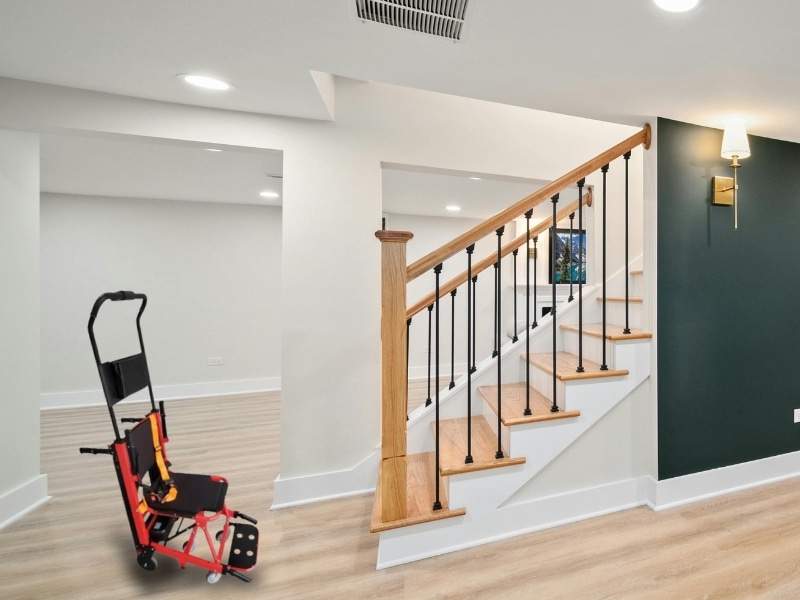
What’s the right moment to install a chair lift for your elderly parent or loved one? If you’re noticing hesitation on the stairs or avoiding upper levels altogether, the issue may already be overdue. A sudden fall can change everything. Home environments should empower—not endanger—ageing Australians. That’s why choosing the best chair lifts for stairs needs to happen before injury, not after. From practical design to caregiver ease, timing matters just as much as features. This article explains the key tipping points for installation, highlights essential features to consider, and provides guidance on evaluating safe options in 2025.
Why are chair lifts for stairs different from traditional stair lifts?
Not all stair mobility tools are created equal. Chair lifts for stairs offer portability, flexibility, and fit where traditional lifts can’t.
- Lightweight design: Traditional lifts are fixed and bulky, while portable chair lifts are easier to move and store. This makes them ideal for homes with narrow staircases or limited installation access.
- No permanent installation: Chair lifts don’t need rail mounting or modifications to walls. That means no costly renovation or downtime waiting for custom installs.
- Versatile configurations: These models are suitable for both straight and curved stairs, both inside and outside. You can use the same device across different properties if needed.
- Transport-friendly: Many fold compactly for car boot storage or multi-location use. They’re especially helpful in care facilities, temporary housing, or dual residences.
Different builds serve different needs—but for elderly use at home, adaptability is often more valuable than fixed automation.
What features make chair lifts for stairs ideal for elderly users?
Not all mobility aids suit seniors. Chair lifts designed for elderly users must prioritise safety, ease, and comfort.
- Anti-slip seating and safety belts: Prevent slippage and sudden movement on inclines. These details reduce panic or resistance from nervous users.
- Easy-access hand controls: Operate the lift with ease, avoiding complex or hard-to-reach buttons. Seniors with arthritis or limited dexterity can still manage operations safely.
- Adjustable backrests and footrests: Ensure upright positioning and reduce strain. Proper alignment can make extended stair use more comfortable and safe.
- Low incline capacity: Designed to handle gentle to steep stair angles safely. This makes them suitable for homes with older or steeper stair designs.
These features combine to form a reliable mobility option for elderly stair assistance, bridging the gap between freedom and fall prevention.
How do portable chair lifts for stairs work in multi-level homes?
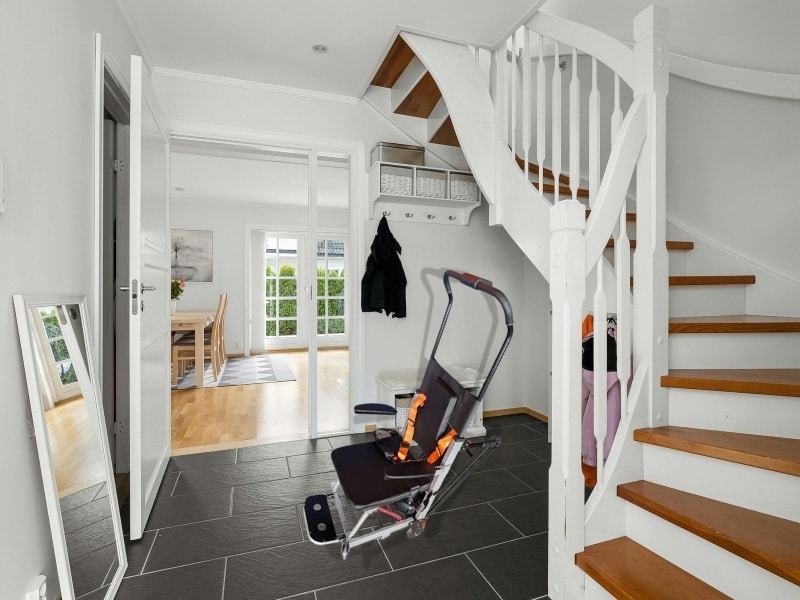
Multi-storey homes increase the stakes for elderly stair safety. Portable chair lifts offer a practical solution—if you understand their limitations and strengths.
- Stair-by-stair lifting: These lifts help individuals move up or down one stair section at a time. They don’t require full-track installation, making them easier to manage in older homes.
- Battery-operated units: Most models run on rechargeable batteries, making them independent from home power. This ensures safety during outages or power interruptions.
- Designed for caregiver support: Handles and brakes allow secure, guided motion. Even family members without formal training can provide practical assistance.
- Compact turning radius: Designed to navigate landings and narrow steps without scraping walls. Their size makes them suitable for use in tight corridors and stairwells.
In complex layouts, it’s worth evaluating stair access solutions in 2025 to determine which models can best adapt to your specific home.
Can a caregiver safely operate chair lifts for stairs without training?
It’s a fair concern—can someone with no medical background help a loved one use a stair lift? The answer often comes down to design, not training.
- Intuitive grip handles: Designed for anyone to operate without needing a formal manual. The controls are straightforward and often colour-coded for ease of use.
- Smooth braking systems: Reduce user error when ascending or descending. These brakes provide extra control when stopping on landings.
- Foot-operated release levers: Let carers guide movement while supporting the person. This helps reduce awkward bending or one-handed operation.
- Clear status indicators: Built-in lights or signals show if the unit is ready or needs charging. Visual cues reduce the risk of mid-use failure.
Caregivers won’t need certifications—but knowing how stair safety devices enhance independence builds confidence for everyone involved.
Which stair lift features matter most for elderly Australians in 2025?
As product options expand, so do feature sets. For ageing Australians, the most critical elements are those that support daily function, not luxury.
- Weather-proof construction: Outdoor use demands water resistance and sun protection. This is especially important in coastal or humid regions like Victoria.
- Dual-user weight capacity: Models should accommodate both the elderly individual and their caregiver, if needed. This dual strength is helpful in assisted transfers.
- Foldable frame for storage: Important in smaller homes or shared spaces. The ability to tuck away the unit preserves room flow and reduces tripping hazards.
- Silent motor operation: Quiet use avoids startling or disrupting other household members. It’s also essential in homes with children or pets.
Here’s a comparison table of features across modern models:
| Feature | Standard Chair Lifts | Elderly-Optimised Lifts |
| Weight Capacity | 100–120kg | 130–160kg |
| Safety Harness | Optional | Included |
| Folding Design | Often fixed | Fully collapsible |
| Charging Type | Wired only |
Wired + Portable Battery
|
| Indoor/Outdoor Use | Indoor only | Both |
Features alone don’t solve fall risk—but ignoring essential upgrades is a common and preventable mistake.
Are manual stair lifts more cost-effective than automated models?
It’s tempting to go manual to save money, but the real cost comes from how often you’ll use—and rely on—the lift.
- Lower upfront price: Manual models typically cost less than powered units. This makes them appealing for short-term or budget-restricted needs.
- Higher physical effort required: Not suitable for seniors with limited arm strength. In many cases, manual lifts require the consistent involvement of a caregiver.
- Fewer mechanical parts reduce breakdowns, thereby lowering maintenance needs. That also means fewer unexpected repair bills.
- No power reliance: Ideal for use during blackouts or in off-grid locations. This independence improves reliability during emergencies.
Still, for stair chair lifts for homes in Australia, powered lifts usually offer better long-term value due to reduced strain and higher independence.
Final thoughts
Timing the purchase of a chair lift for stairs isn’t about age—it’s about confidence. If daily stair use is tentative, slow, or skipped entirely, it’s time to take action. Safety tools exist to extend autonomy, not reduce it. Find out how Stair Climbers can help with elderly home access by reviewing how your current layout matches modern lift options.